Cricinfo Latest Photos

Cricket Mania Headline Animator

Monday, June 1, 2009

Pakistan's pace battery raring to go


Pakistan's bowling attack for the ICC World Twenty20 could provide some anxious moments to opposition batsmen with the addition of the country's newest fast bowling sensation Mohammad Aamer to its pace battery. The attack already includes Umar Gul, the leading wicket-taker at the last World Twenty20.

Gul said he wanted to do better than last time and would attack the batsmen right from the first ball. "We have a balanced attack and if we bowl to a tight line and length, then we can get teams out or restrict them to gettable totals."

Gul said he preferred bowling first change since more swing could be obtained. "It's the ideal time to not only stop the flow of runs but to take wickets. We came so close to winning the title in 2007 but it was bad luck. This time round we want to finish it without a blemish. The title, nothing less, is the aim."

Aamer, a 17-year old left-arm fast bowler from Rawalpindi, has said he wants to emulate his idol Wasim Akram's success in the 1992 World Cup when he plays in the World Twenty20.

"I want fairytale success, and will do my best for it," Aamer said.

Aamer, a protégé of Akram who had called for his selection to the national side in July last year, was born only two weeks after Akram's feats at the 1992 World Cup but said he had watched videos of his idol and that attracted him to cricket. "I was never interested in joining the army. I was attracted by cricket and by Wasim Akram," he said. In his maiden first-class season, Aamer took 56 wickets in 10 matches for Rawalpindi. He also picked up 15 wickets in List A games and was picked for the Bangladesh tour which was postponed. Along with Mohammad Talha, Aamer is regarded as Pakistan's latest pace sensation.

Shakil Shaikh, the official who spotted Aamer, said his swing and pace was handy. "Aamer's strong point is that he can judge a batsman after a few deliveries and then plan his deliveries," Shaikh said.

Akram has tipped him to be a revelation in the World Twenty20. "I have watched him more than once and he's impressive with over 140kmh speed and can swing the ball both ways."

Success will cheer up Pakistan - Younis


Pakistan's captain, Younis Khan, is ready to turn England into his team's home away from home, and views success in the World Twenty20 as the best way to make his troubled nation smile again.

Since the atrocities outside the Gaddafi Stadium in Lahore in March, in which eight security and transport personnel were killed in a terrorist attack on the Sri Lankan team bus, Pakistan's cricketers have been forced into exile. They were barred from competing in the IPL, and their only action since the attack was a low-key ODI series against Australia in the UAE.

Now, however, they are on the world stage in a big way, lining up alongside England and Netherlands in the group stage of a competition that, but for a moment's aberration from Misbah-ul-Haq against India in September 2007, they might well have won at the first attempt.

"It is special to be back on the world stage," Younis told reporters at Lord's. "Especially in Twenty20s, and especially in England. We are suffering from not playing regularly, and no-one is coming to Pakistan, but all the time in the last few months I have been talking to the boys, and telling them to do well [in this tournament]. There are a lot of media here, and [if we succeed] we'll be well on our way to our mission, so to speak. It's very important for us."

There has been much talk in recent weeks about overkill of the Twenty20 format, and burn-out of the game's star players, but such issues couldn't be less of a problem for Pakistan, who are desperate to get stuck into some meaningful cricket. "If you don't play regularly, you don't have that match fitness," said Younis. "But the beauty of international cricket is that it is changing all the time in different conditions, so we feel fresh and will do well in England, in'shallah."

Younis admitted his team's security for this tournament had been stepped up from previous visits to England, but added that such a situation had become common-place for Pakistan. Of greater importance was the opportunity that the visit provides his young players, especially with the prospect of a return to England next summer to play a Test series against Australia.

"Playing in England is everyone's dream," said Younis. "I have been over here for county cricket [with Yorkshire], and my first Test at Lord's was fantastic for me. Playing cricket in Pakistan would be better, but we have problems as everyone knows. England is the home of cricket, it will be good for our youngsters to learn to play in any conditions. Sometimes here it rains, sometimes it's hot, sometimes it's cold."

With that in mind, Younis said that his team's tactics would revolve around a more patient game that has sometimes been witnessed in Twenty20 cricket. "I have a couple of plans," he said. "T20 looks short, but it's not - 120 balls is enough. If you bat normally but with energy, especially in the middle order where you need good running between the wickets, [a score of] 180-190 is very easy.

"In English conditions the new ball does seam, so you need someone like Salman Butt who can play for 20 overs. But in the middle order, we have big hitters like Shahid Afridi and Misbah-ul-Haq, he's a top Twenty20 batsman. So we are not lacking in players."

Afridi's power-hitting game might have been designed with Twenty20 cricket in mind, but Younis was careful not to expect him to shred the opposition every innings. "Afridi was one of best players of the last tournament," he said. "As a captain I have a few good players, but the main thing is everyone respects him. He'll come in and though it's not possible to hit every ball for six, the expectation is there. He's always done a good job for me, and he'll do good for Pakistan."

Reflecting on the near-miss in 2007, Younis admitted that there had been a few players in tears at the end of the final in Johannesburg. When five runs were needed for victory, Misbah mistimed an attempted scoop over fine leg and lobbed a simple chance to Sreesanth on the edge of the circle. But he remained confident that his team could achieve at least a top-four finish this time, and maybe even go one better than two years ago.

"The finishing touches were not there in 2007," said Younis. "But it was fantastic to be a part of that team in the final. Some guys were crying at the end, but in T20 everything can change. My confidence is that I'll take this trophy to Pakistan, but if the plan works ins'hallah it'll be an achievement for us to finish in the top four.

"We have a lot of followers all the time in England, and a lot of cities here have Pakistanis and Indians," he said. "That's the main reason I'm happy to be in England. Our fans are fantastic back home, they are lovers of T20, and now it's dependent on us to prove ourselves. If we play good cricket it will be good for our nation. These days the whole nation is depressed, and only cricket [can lift it]. If we play good and win something, they will cheer. To finish in the top four, my nation will come again and start cheering."

'I've loved every minute of it'


It's been more than 48 hours since the Mumbai Indians lost to Shane Warne's Rajasthan Royals in Durban. Standing on the metal steps that lead up to the press-conference area at St George's Park in Port Elizabeth, Sachin Tendulkar is looking somewhere far away. His team have been all but eliminated from semi-final contention after a loss to the Chennai Super Kings, but it's the one that got away at Kingsmead that continues to haunt Tendulkar. "There's no way you should lose a game when you need just six to win with nine balls to go," he says, voice shot through with disbelief.

"We lost to the Kings XI by two runs as well. I can understand a team being bowled out for 85 when chasing 120, but to bat through the overs and not get the runs... that's inexcusable."

Like most of the greats, Tendulkar hates losing. And as the security guard watches nervously, he talks to me with an earnestness that is almost vehement. There's a perception that many players are on the IPL gravy train for the big-fat pay cheque; players who "shouldn't be here", as Ray Jennings put it in his wonderfully candid way. Tendulkar is not one of them. Some players prefer to walk out to Kylie Minogue's music. In his present mood, you sense that Tendulkar would opt for REM's "Everybody Hurts".

For Tendulkar, like for Glenn McGrath, who spent the entire second season of the IPL on the bench, winning is pretty much everything. This is, after all, the man who once admitted that he found it tough to let his son win when they played with a little bat and ball.

A week after our meeting in windy Port Elizabeth, I see him again. The mood isn't any better. Mumbai have been thrashed by Delhi Daredevils. A campaign that started promisingly with victory in the opening game at Newlands against the fancied Chennai lies in tatters. Five wins and eight defeats, seventh on the table.

At the press conference he bites down on some words, tries hard not to point fingers. But his disappointment is an open wound. Here for the money? You must be joking. As he prepares to leave the stadium and the 40-minute drive from Centurion to the team hotel in Sandton, we arrange to talk. Over the phone. I still have another game to watch, and Manish Pandey, a 19-year-old with a baby face, pounds out a heady century.

I slip unnoticed into the press-conference room and dial the number. It makes sense to ask Tendulkar about the IPL experience. After all, most of the South African contingent has grilled him about the way their nation has embraced the tournament. And when we first chatted, a fortnight into the competition, he had mentioned just how much of a strain the interminable travel was. "It's been very good but it was tough as well, especially to lose so many close games," he says after a small pause. "We should have won them, but we just didn't finish the job.


"That was a decision I took two years ago, not to play Twenty20 cricket for India. I felt my body was struggling and I wasn't able to give 100%. I didn't want to be a burden on the team. If you have one loose link, it's unfair on the other guys"


"Also, playing away from home has been different. People back home, not just in Mumbai but right across India, had been looking forward to this IPL season. That it didn't happen at home must have been hard on them. It's always different when you can't watch it live. The home games are very big back home. The atmosphere is something else. And you get pretty much everyone backing the home team. But I sort of knew that people would turn up and appreciate good cricket in South Africa. The crowds have been fantastic."

Given how well some of the senior players have done in the IPL, it's hardly surprising that there has been innuendo about how useful their experience would be in English conditions. But Tendulkar himself has no regrets about missing out on the World Twenty20. Sure, he'll be at some of the games, but he'll also be at Wimbledon, enjoying some time away from the spotlight that has been his lot for two decades now.

"That was a decision I took two years ago, not to play Twenty20 cricket for India," he says. "I felt my body was struggling and I wasn't able to give 100%. I didn't want to be a burden on the team. If you have one loose link, it's unfair on the other guys.

"The team did well, more than well, in South Africa [2007]. It's a settled side now. I felt I should not disturb the combination. One-day cricket and Test cricket are different, because I've been part of the team for so long. But if I was to force myself into the Twenty20 team, it would mean a reshuffle that I don't want."

Even after such a gruelling IPL season - each of India's 15-man squad played a part - he remains confident that MS Dhoni's team can retain the trophy they won in improbable circumstances in the Highveld two years ago. "I think we've definitely got a tournament-winning squad," he says. "It looks fantastic, in all respects. The batting, bowling and fielding are equally strong, and the morale is very high."

Along with the seniors' debate, there have been young players catching the eye. Before Pandey's brilliant innings, there was Sudeep Tyagi with his seam bowling, and Pragyan Ojha with his left-arm spin. But when you ask Tendulkar about the young players that he has watched in the tournament, and their long-term potential, he shies away from judgments. "I don't think this is the right format to judge a player," he says. "One-day cricket or Tests reveal far more about a player's ability. With Twenty20 you can sometimes have days when everything you try just comes off."


His own career has revived spectacularly after the struggles with injury. There were two Test centuries in Australia, and though he failed in Sri Lanka, centuries in Chennai and Hamilton played a huge part in series victories over England and New Zealand. There were also two magnificent innings in the CB Series finals against Australia in March 2008, when he rewound the clock to Desert Storm times and single-handedly tilted games India's way.

A few more straight-drives and paddle sweeps and he'll have 30,000 runs in international cricket. Barring Don Bradman's, which acquire a near-mythical status as the years pass, Tendulkar owns practically every batting record in the game. What makes the man tick, what makes him get out of bed every morning and choose the less-than-easy option?

"I enjoy playing cricket," he says with a laugh. "It's the simplest answer and the one people seem to find hardest to believe. I love being out there. I have a lot of fun. There are always various challenges to occupy you, and also the pride that comes with playing for India. That's still a huge thing, because it's all I ever wanted as a child. I don't think my feelings are any less strong now."

Ever since he was a teenager scoring hundreds for fun in Mumbai, it's his sense of calm that has set him apart. Few events have shaken that composure down the years, and none quite like the terror attacks in Mumbai last November. The siege at the Taj Mahal Hotel took place just around the corner from his restaurant, with its cricket-themed walls and personally chosen menu.

"That was a tragic experience," he says after a long pause. "I don't think anyone expected that something of that nature could happen. It was just terrible. I dedicated the victory against England [Chennai] to the victims and their families, because I felt it was the least we could do. Winning a cricket match was not going to make people forget what had happened to them, but if they smiled even for a second, we had been able to do something. It was only about diverting minds, however briefly. It was a huge loss for everyone, and not something that can ever be measured in terms of wins and losses."

In that context, was that century the one he cherishes most? "Definitely," he says. "The mood of the entire nation was so low. And on that last day, we finished so strongly. It was my most important hundred."


"Right now, things have been going well. I want to focus on the next engagement. Winning the World Cup is the ambition of every cricketer. I'm not alone in that. But it would be special


In his wonderful biography of Sunil Gavaskar, the late Dom Moraes titled one chapter "The Halcyon Years". These are such days for Tendulkar, for whom the finish line is in sight. But even as he approaches it, he's enjoying every moment of being part of a side that appears equipped to take on all-comers, home and away. Having spent much of his career as part of a team that struggled, especially away from home, what does it now feel like to be senior statesman and a member of a side that's challenging for top honours in every form of the game?

"It's terrific," he says, the mood lifting. "I find it a real pleasure to be part of this team. We've got the quality to compete with the best, and it's exciting when you do so well." The emphasis is on enjoying the moment, rather than worrying about which boxes still remain to be ticked. "I don't look to set targets, honestly," he says. "I play as hard as possible, and when things happen it's a great feeling. I don't disclose targets. But for example, it's nice when you go to Australia and do well there."

For most people connected with Indian cricket, though, the World Cup remains a Holy Grail. Tendulkar, who grew up watching the Kapil Dev generation, has mixed memories of both 1996 and 2003, when mountains of runs off his own bat weren't enough to cover for inadequacies elsewhere. And he insists that he won't put pressure on himself by over-egging the World-Cup pudding. "I don't want to look that far ahead," he says. "Right now, things have been going well. I want to focus on the next engagement. Winning the World Cup is the ambition of every cricketer. I'm not alone in that. But it would be special."

His children, Sara and Arjun, are now old enough to nurture ambitions of their own, and the time spent away from them is accepted with something approaching resignation. "I guess you have no choice," he says of the touring life. "When the children grow up, they'll know why their father was away for so long. And hopefully, they'll be proud of me and what I did."

For 20 years now the team has been his surrogate family, and there have been those that have left a deeper impression than others. "There have been many that I've shared the Indian dressing room with, but I'd make special mention of Sunil Gavaskar and Ravi Shastri," he says when asked about those who helped shape him. "My coach, Ramakant Achrekar, my brother Ajit, and my father were the others that have given me the most."

On the field, not much has changed. Abdul Qadir once mentioned milk, before he was smashed for sixes in Peshawar, and there was the uncomfortable task of testifying in the Harbhajan Singh "racism inquiry" not so long ago. Banter has been part of the game ever since the good Doctor Grace told a bowler that the crowds had come to watch him bat, and not to see him bowl. Tendulkar wouldn't have it any other way. "I'd like to think that I've been friendly with everyone," he says. "Whatever happens is only on the field and you don't need to get too personal. I don't expect friendship out there. They are competing as hard as you are, and looking to win against you. As long as you bear no grudges, I have no problems."

Jack Fingleton immortalised Victor Trumper with Never Another Like Victor. The Archie Jackson story lives on through the words of David Frith. In Tendulkar's case words aren't even necessary. There are so many thousands of hours of archival footage, and even those born years after Waqar Younis bloodied his nose on debut have watched his finest hours on youtube and commemorative DVDs. But what if it was possible for him to choose how he's remembered after leaving the game? He thinks for a while. "As somebody who enjoyed the game as much as he could," he says. "I've played fair and hard and loved every minute of it. That would be the best way to be remembered. And also as a team man. While you're achieving team goals, your own milestones will pass by."

PCB panel ends work on Asif case


The PCB committee looking into fast bowler Mohammad Asif's 19-day detention at the Dubai Airport for drug possession has concluded its work and will pass on its recommendations to the board chairman Ijaz Butt.

"We concluded our work into this case today after meeting Asif," Wasim Bari, PCB director HR and head of the three-man committee, told Cricinfo. "In a day or so, our recommendations will be passed on to the board chairman and they will take further action."

Though the committee has remained silent on the possible punishment - unconfirmed reports in recent days suggest he might receive a heavy financial penalty only - it is now clear that Asif was deported from Dubai and might not find it easy to travel there again. As Pakistan are likely to be playing in the UAE regularly in the future, it is a concern for the board.

"Asif didn't provide any document to us as he had said he would about his deportation and future entry into Dubai," Bari said. "We have given him plenty of time to hand it in and given him flexibility but he didn't provide us with anything. He did turn up today and we thanked him for his cooperation." The committee itself has a letter from the Dubai public prosecutor stating that Asif was deported.

Asif turned up for the final hearing today with his lawyer, but the lawyer was not allowed to attend, the committee arguing it was an internal board hearing and not a legal matter as such. Asif did not insist on the lawyer's presence.

Asif was detained in Dubai last June on his way back from the first season of the IPL. In documents in the possession of Cricinfo, prosecutors in Dubai confirmed that he was found with a small quantity of opium; he was let off without a charge ultimately, local authorities arguing that the offence was a 'trivial' one and a case not worth pursuing. But in the documents it clearly states that Asif was deported.

Asif is currently banned from playing any form of cricket till September, after he tested positive for the banned anabolic steroid Nandrolone during the IPL last year. That was already the second time in his brief international career that he has tested positive for the same steroid, having once done so just before the Champions Trophy in 2006.

Gayle must walk the talk


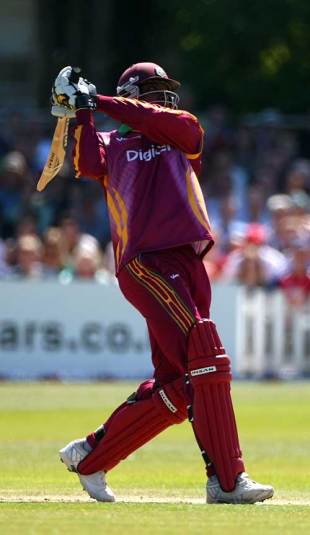
Chris Gayle, the West Indies captain, has made no secret of his enjoyment of Twenty20. In his own words, it "wouldn't be so sad" if Test cricket gave way to the 20-over version and he was considering giving up the longer formats to focus on Twenty20. The way his men played in the Tests and ODIs in England it looked as though he wasn't the only one whose attention span was suited to three-hour games. Expectations will therefore be raised that West Indies can lift for the World Twenty20.

They are in a difficult group along with Australia and Sri Lanka - it's the only group that doesn't feature an Associate side - and therefore they must hit top form from day one. They beat Australia the only time the teams have met in a Twenty20 and they have never faced Sri Lanka.

West Indies have the quite remarkable record of having tied two of their 11 Twenty20 internationals - both against New Zealand - and they have won four and lost five. At the 2007 World Twenty20 they went down to both South Africa and Bangladesh in the group stage and were bundled out in the space of three days.

Strengths

A batting line-up boasting Gayle, Xavier Marshall, Ramnaresh Sarwan, Andre Fletcher, Denesh Ramdin, Dwayne Bravo and Kieron Pollard should score its runs quickly. They are all capable of demolishing an attack with clean strikes and opposition bowlers must keep the wickets falling to stop West Indies posting a big score. Throw in Shivnarine Chanderpaul as the man who can anchor one end should wickets tumble and it's a batting order with the potential to scare any bowling group.

Weaknesses

Those who live by the sword die by the sword. West Indies' batsmen can be destructive but they can be just as liable to capitulate dramatically. And it's impossible to predict which version of the side will arrive on any given day. At their best Fidel Edwards and Jerome Taylor are fine fast bowlers but opposition batsmen's eyes will light up when they see the backup brigade of Lionel Baker, Dwayne Bravo and Darren Sammy.

X-factor

The X-man is the X-factor. Nobody highlights the disparity between potential and consistent performance in West Indies' squad quite like Xavier Marshall. Never one to back down, he has the ability to dominate even the best attacks, as he proved when Australia visited the Caribbean last year. His 36 off 15 balls in the Twenty20 in Barbados set up West Indies' victory over Ricky Ponting's men. Far too many failures fill the gaps between his triumphs but even one matchwinning effort in this tournament will justify his place.

Key players

Gayle is the only man to have scored a century in a Twenty20 international and it came at the previous World Twenty20. Having shown little interest in the Test series in England, he has no excuse now that his preferred format is taking centre stage. At his best, he can win a game in a handful of overs. The question is, after such a lean patch in England, can he reach his best?

Twenty20 form guide

Over the past 12 months, West Indies have won two Twenty20s, lost one and tied one. Importantly, they beat Australia - who they meet in the group stage - in Barbados last year. But their matches have been infrequent and it's impossible to ignore their failure to win a Test or ODI in England this year - much of the personnel remains the same from those longer formats.

Squad: Chris Gayle (capt), Denesh Ramdin, Lionel Baker, Sulieman Benn, David Bernard, Dwayne Bravo, Shivnarine Chanderpaul, Fidel Edwards, Andre Fletcher, Xavier Marshall, Kieron Pollard, Darren Sammy, Ramnaresh Sarwan, Lendl Simmons, Jerome Taylor.

All eyes on New Zealand's new crop


First, the good news. The shorter the format the more competitive New Zealand become. Despite slumping to eighth on the Test rankings they have been World Cup semi-finalists in two of the past three tournaments and matched that achievement at the inaugural World Twenty20, where they were denied a place in the decider by Pakistan.

Now the bad news. Their leading performers two years ago included Craig McMillan, Shane Bond and Mark Gillespie, none of whom are there this time around. But there is an upside: since 2007 they have added a couple of more than handy names to their team with Jesse Ryder and Martin Guptill proving dangerous at international level.

And the other plus is that New Zealand have found themselves in a group with Scotland, meaning along with South Africa they should have no trouble progressing past the opening stage. Then things become less clear-cut. Will a few powerful hitters and an economical A-grade slow-bowler be enough for them to move past more imposing line-ups? Only time will tell. But it's a fool who writes off New Zealand when the 50- or 20-over tournaments arrive.

Strengths

Crafty, high-quality spin is a major weapon in Twenty20 and slow bowlers don't come any cannier than Daniel Vettori. New Zealand can all but guarantee that he will deliver four thrifty overs each match; he has done that in every one of his 14 Twenty20 internationals and the most he has ever gone for is 6.75 an over. Of men who have played ten Twenty20s for their country, only Umar Gul has a better economy rate than Vettori's 5.35.

Weaknesses

While Vettori contains at one end, the fast men will be required to keep things tight at the other. And that is New Zealand's biggest challenge. Bond, Gillespie and Chris Martin did adequately in 2007 but none is in this squad. A pace attack based around the likes of Kyle Mills, Iain O'Brien, James Franklin, Ian Butler and Jacob Oram won't strike fear into many Twenty20 batting line-ups. To compensate for a lack of firepower they'll need to bowl smart - changes of pace, yorkers, cutters - or else risk an early exit.

X-factor

According to the online Wiktionary, an x-factor is that which has "unknown or unforeseeable consequences". That's pretty much how New Zealand Cricket would define Jesse Ryder. Despite having had behavioural issues in the past and being one of the big flops of the recent IPL, Ryder hasn't often let his country down with the bat. A Twenty20 strike-rate of 137.61 shows his power and if he and the equally dangerous Brendon McCullum can get their side off to a couple of quick starts, it could be the difference between an early departure and a place in the finals.

Key players

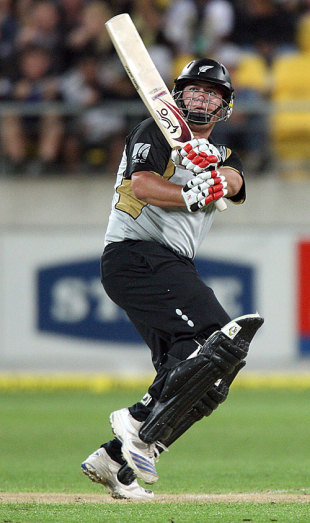
Vettori is the most important with the ball, Ryder and McCullum could destroy attacks and Oram has the ability to finish an innings in style. But it's hard to argue that any of those men are more important to New Zealand's chances than Ross Taylor. No. 4 is a key position in Twenty20. If the openers have failed he must be steady without stalling; if they have thrived he needs to maintain or increase the momentum immediately. Taylor has the game to fill that role. He had a good IPL and his barely believable 81 off 33 balls against Kolkata Knight Riders was a highlight.

Twenty20 form guide

Warm-up wins against Bangladesh and Ireland don't reveal much, although the form of Taylor and Guptill in those games was a pleasing sign. More of a positive was New Zealand winning their two most recent Twenty20s, against the reigning champions India in February. Since then it has been an up-and-down time for their squad members. Taylor thrived at Royal Challengers Bangalore, McCullum played a couple of strong innings as captain of Kolkata Knight Riders but was in the firing line as his team failed, while Ryder, Oram and Scott Styris had largely forgettable tournaments. In the meantime, Franklin has enjoyed a productive stint with Gloucestershire and O'Brien has been acclimatising with Leicestershire.

Squad: Daniel Vettori (capt), Neil Broom, Ian Butler, Brendon Diamanti, James Franklin, Martin Guptill, Brendon McCullum (wk), Nathan McCullum, Peter McGlashan (wk), Kyle Mills, Iain O'Brien, Jacob Oram, Jesse Ryder, Scott Styris, Ross Taylor.

Australia warm up with easy win


Australia, spurred to a daunting total by a thumping opening partnership, clinched a facile victory over Bangladesh in Nottingham. From the start it was apparent that Australia were going to dominate, what with Bangladesh's medium-pacers leaking runs and Tamim Iqbal reprieving Brad Haddin in the first over. Haddin and Shane Watson - who slammed a 21-ball half-century - made Bangladesh pay and though Mahmuddulah's four wickets ensured Australia didn't post a mammoth total, the favourites clearly had enough runs. Bangladesh's top order chased hard, but following Shakib Al Hasan's dismissal for a sprightly 54 in the 14th over the wheels fell off.

Australia's openers effectively nailed the match in eight overs. When the ball was new, the field in and the wicketkeeper up, both Haddin and Watson boldly chose to go over the top, twice lofting Syed Rasel over the onside for sixes in an over. Then, when the field spread out, the pair chipped and nudged it cleverly into the gaps to keep the board ticking over constantly, but also managed to find the fence whenever the bowlers dropped it short and wide.

The fourth over went for 16, with Haddin and Watson each slamming sixes, and the fifth cost 22. By this time Watson and Haddin both were using their feet and wrists excellently. Watson dumped offspinner Naeem Islam for four and six in consecutive deliveries as Australia reached 86 in seven overs. Watson raised his half-century in just 21 balls with another swipe over midwicket, the most profitable shot on this track.

Mahmudullah struck in a double-wicket over during which both openers picked out fielders in the deep. Enter Andrew Symonds and three sixes over midwicket, but after racing to 27 from 14 balls, he fell to Mahmudullah in the 13th over. Three deliveries later Mahmudullah ended Ricky Ponting's scratchy innings and Australia had a new pair at the crease again. Where his team-mates all suffered, Mahmudullah returned figures of 4 for 37 and his role was instrumental in roping Australia in from what seemed a massive total.

There was the usual flurry of heaves, hoicks and wickets during the final overs as Bangladesh snapped a 52-run stand between Michael Hussey and Michael Clarke and finished with a tidy last three overs.

Bangladesh began their chase frenetically, taking 31 from the first two overs. In the first over Tamim larruped Nathan Bracken for 18, using his feet to launch a beautiful straight six. In the second over Junaid Siddique took Brett Lee for three boundaries, the most audacious being a swat over extra cover with Siddique a third down the track.

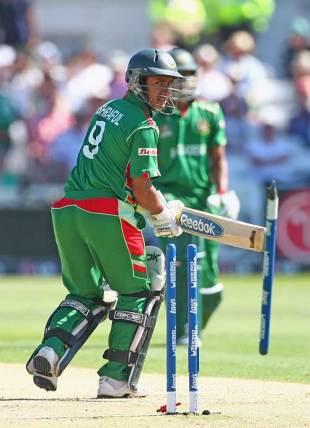
Mitchell Johnson sent Siddique's leg stump cartwheeling with a quick and straight delivery and Lee had his man when Tamim drove straight to mid-off in the fourth over. Then came an engrossing period where both sides battled for leverage. Mohammad Ashraful broke the shackles of a nervous start with three successive fours off Johnson, using his crease excellently to clear the infield on both sides. Bracken swung it back with three singles in the sixth over, but Shakib and Ashraful took boundaries off David Hussey; Tamim's sweep was forceful while Ashraful's reverse-paddle was gentle.

In the next over Tamim paddled and drove James Hopes for boundaries and Ashraful sliced to third man. Following Ashraful's dismissal for 26 to the first ball of Johnson's next spell, Shakib clubbed Symonds' first two deliveries for six, survived a stumping, and promptly creamed four through extra cover. His half-century needed just 25 deliveries.

Shakib was the fourth to go and at the time Bangladesh were still in the hunt, but his dismissal was a hammer blow and the innings never recovered as Lee and Bracken strangled the life out of the lower order.